

The Brief Introduction of Different Tire Patterns 2 --- Common Tire Patterns
Let's introduce the tire patterns that are relatively common in the market.
Mixed Tread Tires

The design of an ordinary civilian tire requires all-round consideration, not only for driving on sunny and dry ground, but also for driving on wet ground in rainy weather. It can be said that the weather characteristics of the four seasons of the year must be taken into account, so that ordinary users can It is impossible to change tires frequently depending on the weather.
The longitudinal pattern on the tire mainly plays a role of rapid drainage, but it will lead to insufficient grip of the tire; while the transverse pattern on the tire has a higher grip, but the drainage and guidance are not good. Therefore, the engineers who designed the tires mixed the two patterns together and reached a "tacit understanding", so that the longitudinal pattern in the middle that can provide fast drainage and the transverse pattern on the shoulders that provide grip are combined in a perfect situation, so that they are mixed. The pattern was born. At present, this kind of mixed pattern tires are widely used in most vehicles such as cars, buses, trucks, etc., and it is the most worry-free choice.
Ordinary mixed tread tires are less restrictive. They can be exchanged front, rear, left, and right. It is a tire with excellent overall balance. It is suitable for ordinary consumers' daily urban use, and is the golden mean in tires.
Asymmetric Tread Tires

Asymmetrical pattern means that the left and right sides have different pattern structures. Because the left and right pattern structures are different, the design usually pays more attention to the design of patterns that increase the ground pressure of the outer patterns when turning. This is why asymmetric tires perform relatively well when cornering under certain conditions. And considering the situation of daily use, the wear resistance of the outer pattern of asymmetric tires can also be improved accordingly.
Not only that, because the patterns on both sides use different structural forms and rubber formulas, the overall performance of the tire can be stronger and more comprehensive. For example, one pattern can focus on drainage capacity, and the pattern can focus on grip ability. At present, asymmetric tread tires have been widely used and have been recognized by the market. They are the first choice for most car owners when buying tires.
It should be noted that due to the different inner and outer patterns of this kind of tire, it is necessary to determine whether the inner and outer tires are correct during installation. There are no special requirements for the tires with this pattern when the tires are swapped. The front, back, left, and right are all right, as long as the main tire is inside and outside.
Directional Tread Tires
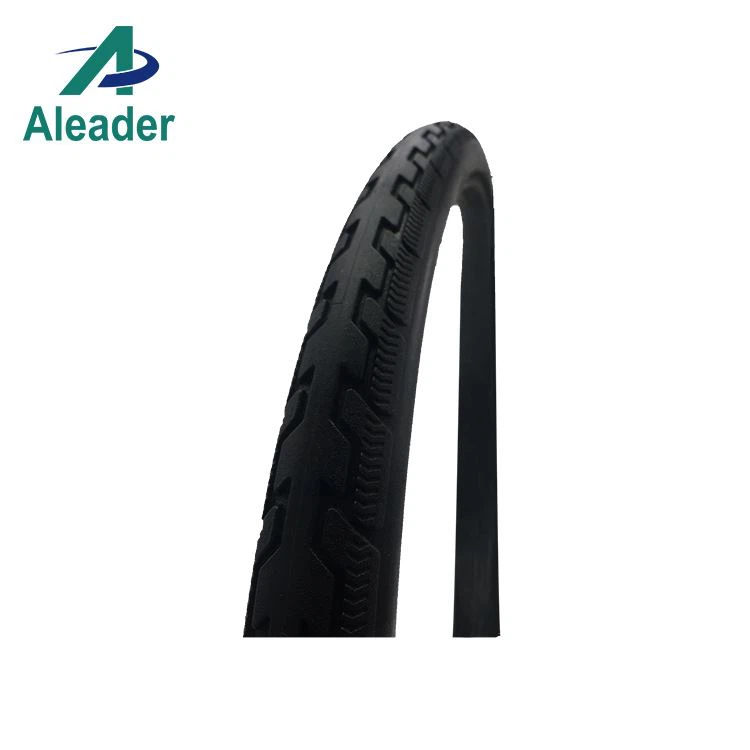
The grooves of the directional tread tires are connected to each other, which has strong road performance and strong drainage capacity. The tire with this pattern has a fixed rolling direction, that is to say, the tire can only run in one direction. The advantage of this is that the rolling resistance of the tire will be relatively small, and the vehicle controllability is better. But also because of this design, the directional tread tire cannot be reversed, and only the same side tire can be exchanged, which is why it is called the directional tread tire.
All patterns of directional tread tires are in one direction, and have the characteristics of larger tread patterns and fewer cross-cut patterns. These characteristics determine that the directional tread tire has low rolling resistance, good handling performance, and other performance advantages.
Directional tread tires have strong grip and drainage performance, and the speed level can be made very high, and the front direction and handling performance can also meet the demanding enthusiasts.
But you must pay attention to the rolling direction of the tire when installing. Generally speaking, directional tread tires have obvious arrow signs to indicate the rolling direction of the tire. If the tire pattern is incorrectly installed, the tire may shake during the reverse driving process, which will accelerate the wear and tear, and the grip will be significantly weakened in rain.
Although directional tread tires sound very professional, the price of mid-range directional tread tires is pretty reliable. You can buy a common-spec directional tread tire for about 1,000 yuan. Especially suitable for rainy or high-speed vehicles. In addition, many small tire factories also produce directional tread tires, but the performance is not good. If you plan to buy it, you still need to consult with those around you who have used it or ask the experts on the Internet to understand.
Block Tread Tires
Block tires are widely used in off-road vehicles. Generally, they are divided into three types according to different conditions of use: road tires, all-terrain tires and mud-terrain tires.

a. Road Tires
Road tires are referred to as HT tires. Generally speaking, neutral road tread tires are usually installed on new vehicles when off-road vehicles leave the factory. They are mainly used for road driving. They are characterized by soft sidewalls and fine tread patterns.
b. All-Terrain Tires
All-Terrain Tire is the most widely used tire for off-road enthusiasts. The design of all-terrain tires is more compatible than road tires. The pattern design of all-terrain tires is rougher, and the spacing of the fetal teeth is slightly larger than that of road tires. The negative effect of this design is that the road performance decreases and the noise increases, but Durability and adhesion on non-paved roads are stronger than road tires. It is a tire with both off-road and road performance.
This is a good choice for those car owners who usually use their car as a means of transportation and occasionally go out on weekends and holidays.
It should be noted here that the difference between different brands and different types of AT tires is also very big. AT tires are the most complex of off-road tires. This type of tires focuses on sand and off-road tires; others focus on road driving; Driving in the mud. In short, the more rubber that touches the ground, the better the road handling; the less the touch pattern and the deeper the groove, the better the off-road performance.
c. Mud-Terrain Tires
Mud-Terrain tires are generally only used by off-road enthusiasts and special road workers. It is the opposite of highway (HT) tires. MT tires have hard walls and exaggerated fetal teeth. The distance between fetal teeth is obviously too large, which is convenient for slow mud discharge or high-speed mud throwing when driving on muddy ground. In addition, on some harsh ground It is easier to increase the adhesion on the surface, such as uneven rocky ground. The MT tires are very noisy when driving on the road. When the speed is lower than 10km/h, the vibration of the fetal teeth will be felt. It is easier to lose control if driving on a rainy pavement.
But once on the unpaved ground, it can give you a different feeling of grip, especially on the rough terrain, it is not easy to damage, and it will bring you strong confidence.


